'%3e%3cg%20id='Group_60'%20data-name='Group%2060'%3e%3cpath%20id='Path_52'%20data-name='Path%2052'%20d='M73.9,28.453a6.189,6.189,0,1,0,6.189,6.189A6.188,6.188,0,0,0,73.9,28.453Z'%20fill='%230B1220'%3e%3c/path%3e%3cpath%20id='Path_53'%20data-name='Path%2053'%20d='M73.9,50.669a6.189,6.189,0,1,0,6.189,6.189A6.188,6.188,0,0,0,73.9,50.669Z'%20fill='%230B1220'%3e%3c/path%3e%3cpath%20id='Path_54'%20data-name='Path%2054'%20d='M112.154,28.453H89.723A6.045,6.045,0,0,0,83.678,34.5v.284a6.047,6.047,0,0,0,6.047,6.047h8.242a4.919,4.919,0,0,1,0,9.839H89.974a6.3,6.3,0,0,0-6.3,6.3,6.08,6.08,0,0,0,6.08,6.08h22.4a.076.076,0,0,0,.076-.076V28.53A.077.077,0,0,0,112.154,28.453Z'%20fill='%230B1220'%3e%3c/path%3e%3c/g%3e%3crect%20id='Rectangle_131'%20data-name='Rectangle%20131'%20width='6.783'%20height='34.744'%20transform='translate(118.344%2028.254)'%20fill='%230B1220'%3e%3c/rect%3e%3cpath%20id='Path_55'%20data-name='Path%2055'%20d='M141.543,28.255H128.074V63h6.783V49.921h6.686c7.173,0,11.467-4.929,11.467-10.834s-4.294-10.832-11.467-10.832M141.2,43.82h-6.344V34.305H141.2c3.074,0,5.026,1.951,5.026,4.782s-1.952,4.733-5.026,4.733'%20fill='%230B1220'%3e%3c/path%3e%3cpath%20id='Path_56'%20data-name='Path%2056'%20d='M167.683,28.255A12.787,12.787,0,0,0,158.264,32c-3.513,3.454-3.416,7.725-3.416,13.627s-.1,10.175,3.416,13.63a13.662,13.662,0,0,0,18.788,0c3.514-3.455,3.464-7.727,3.464-13.63s.05-10.173-3.464-13.627a12.674,12.674,0,0,0-9.369-3.744m4.342,26.75a5.675,5.675,0,0,1-4.342,1.828,5.786,5.786,0,0,1-4.392-1.828c-1.318-1.444-1.66-3.032-1.66-9.625s.342-8.181,1.66-9.623a5.78,5.78,0,0,1,4.392-1.829,5.669,5.669,0,0,1,4.342,1.829c1.318,1.442,1.708,3.032,1.708,9.623s-.39,8.181-1.708,9.625'%20fill='%230B1220'%3e%3c/path%3e%3cpath%20id='Path_57'%20data-name='Path%2057'%20d='M206.183,34.305V28.255H183.3V63h22.886V56.948h-16.1V48.5h13.713V42.454H190.079V34.305Z'%20fill='%230B1220'%3e%3c/path%3e%3c/g%3e%3c/svg%3e)
Baza wiedzy · Case study · Koszty energii
APA Group: how charging a car changes a building's energy use
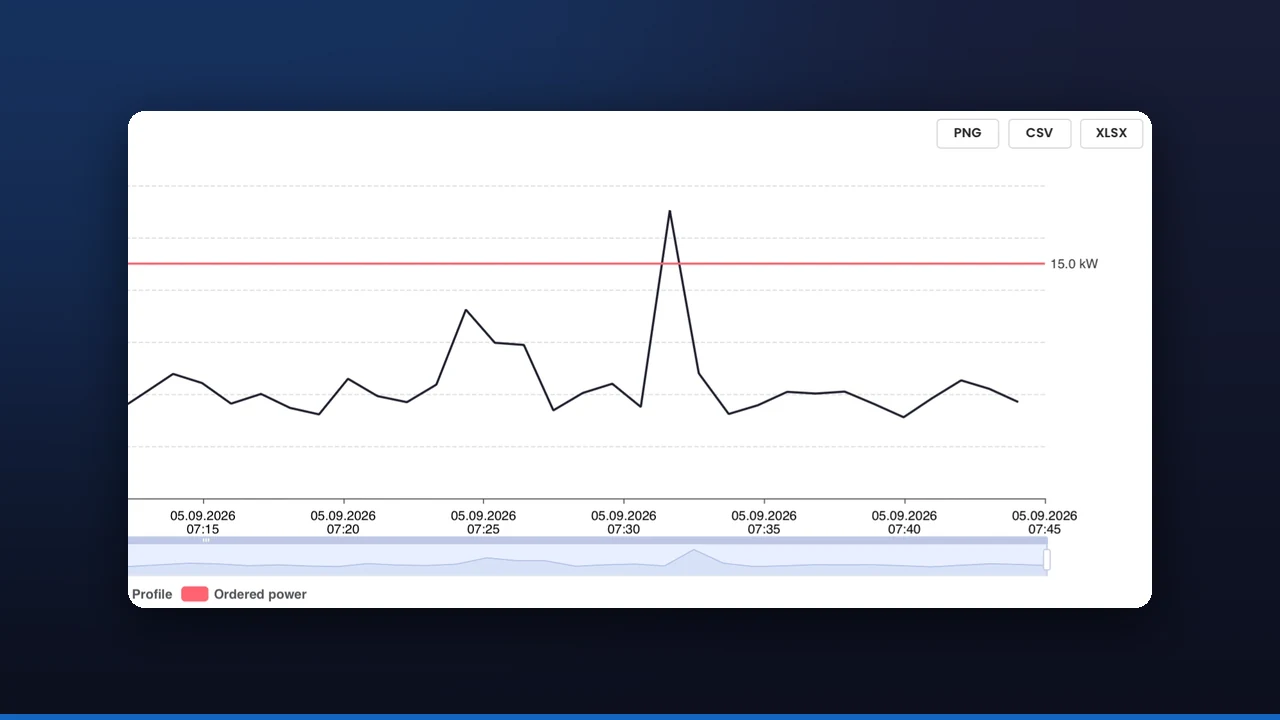
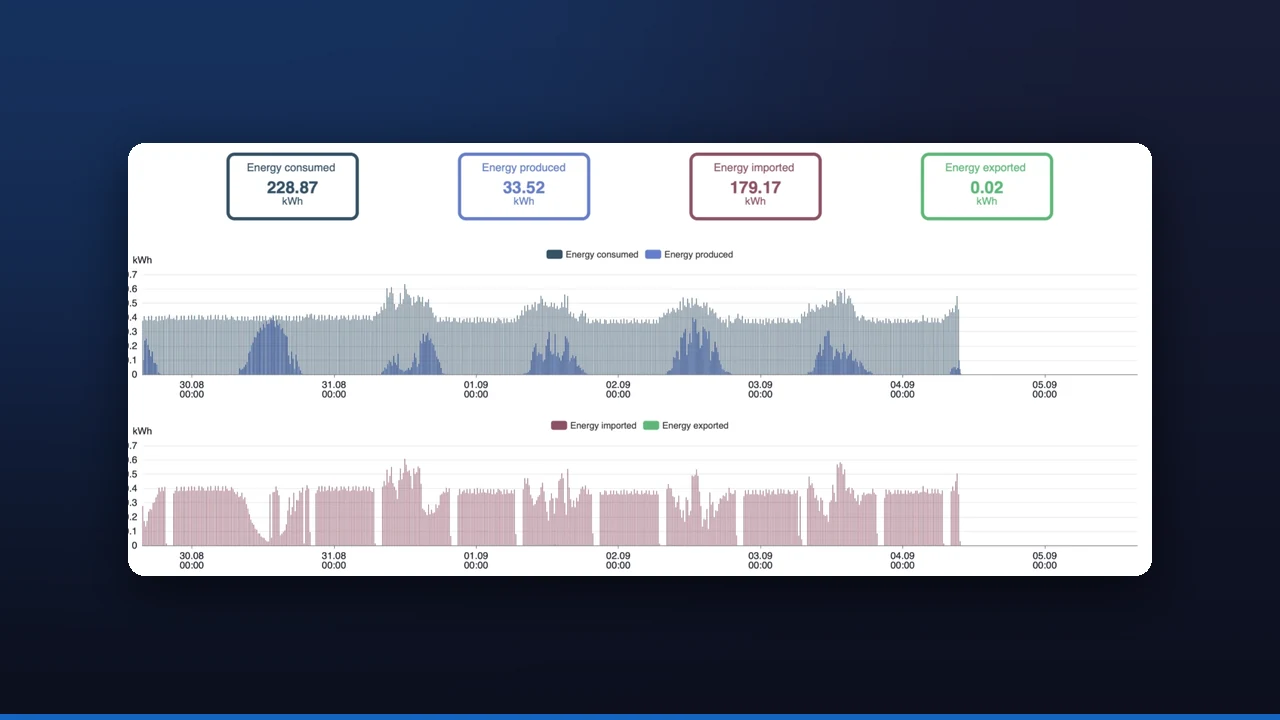
In a test at APA's head office, the building's hourly energy use rose from about 10 to 30 kWh. IPOE made it possible to see the charging session against the other loads.
IPOE Team · 9.09.2026
The challenge
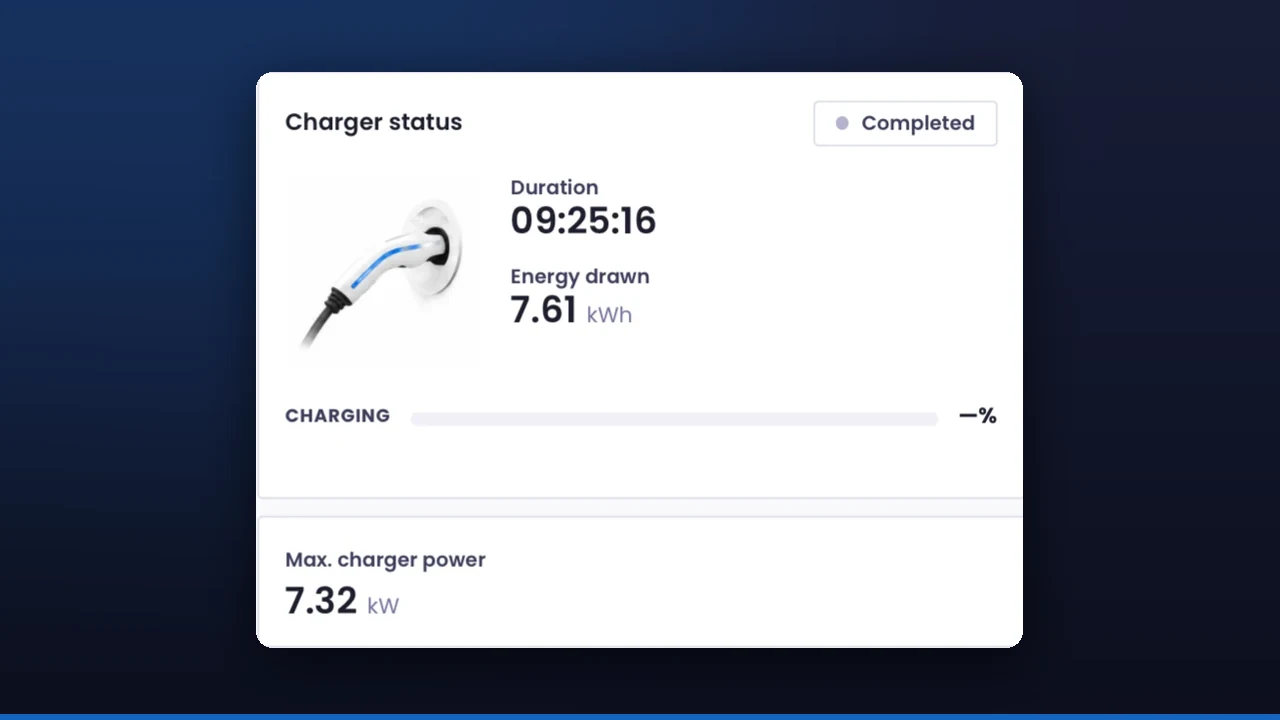
An electric vehicle charger becomes one more load in a building's installation. To assess its effect on energy demand, the charging session has to be set against the operation of the other equipment.
APA carried out such an analysis at its head office in Gliwice. The aim was to check how a charging session for a single vehicle changes the building's consumption profile.
Measurement and analysis
In the test described, energy use over the hour compared rose from about 10 kWh to about 30 kWh while the vehicle was charging. That is roughly three times the energy drawn over that period.
Bringing the readings together in IPOE made it possible to analyse the load associated with charging against the building as a whole. The data can support the choice of a charging schedule and an assessment of the available power headroom.
What the test shows
The measurement shows why EV infrastructure is worth including in shared monitoring of a site. A charging session can change a building's energy profile considerably, even for a single car.
Values in kWh describe the energy used over a given period. Assessing peak power and the risk of exceeding agreed limits additionally requires analysis of the relevant power measurements and of the billing terms. A comparison of 10 and 30 kWh on its own does not establish peak instantaneous power.
What it means in operation
IPOE provided the data needed to assess the effect of charging on the building. The result described comes from a measurement test; it is not a measurement of savings achieved, nor confirmation that every risk of overload has been removed.
Let's talk about charging at your site
Planning chargers at an office or a plant? Talk to an IPOE engineer about the measurements that will help you assess their effect on energy use and on the load at your connection point.